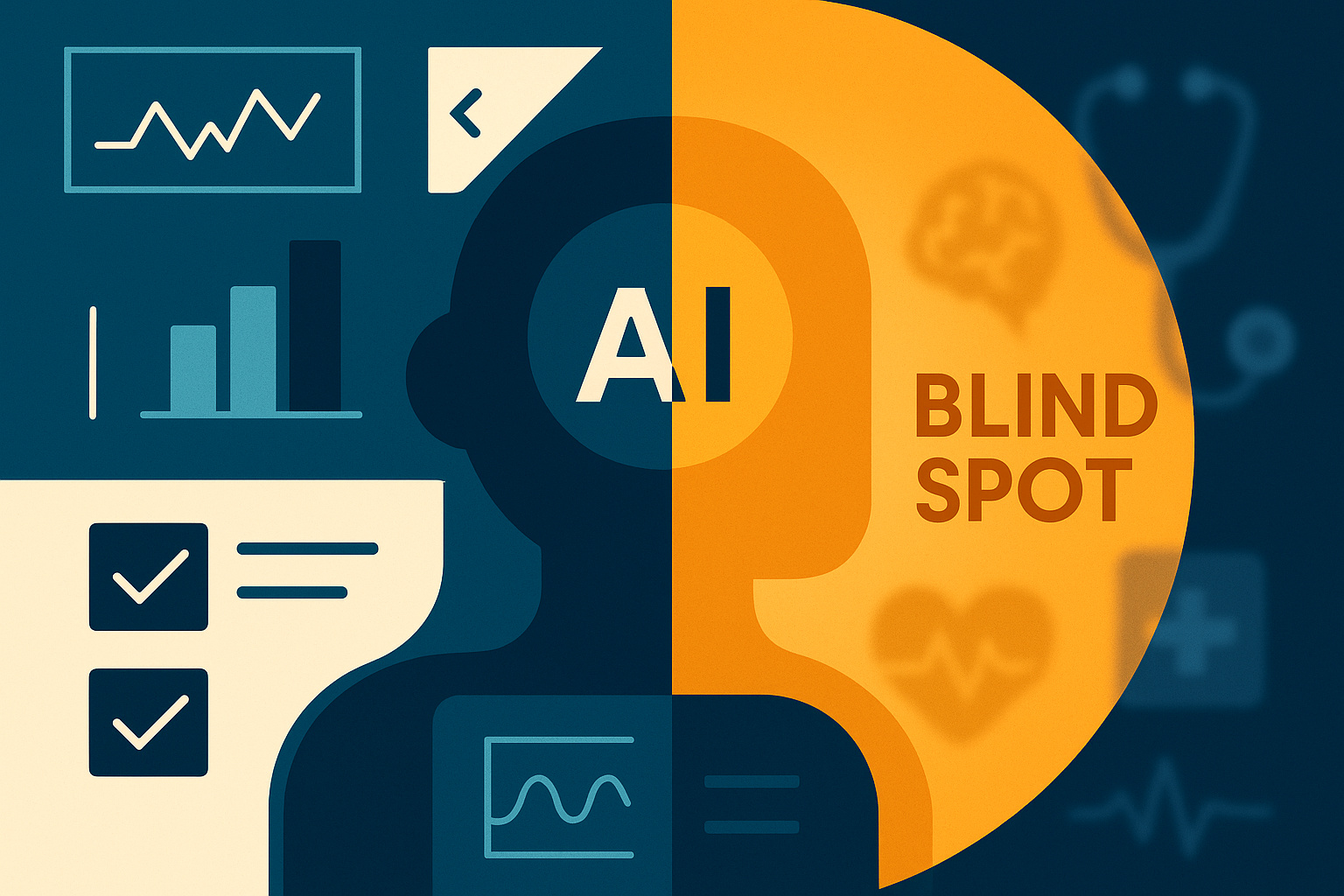
AI’s Biggest Blind Spot Isn’t Politics—It’s Your Health
TL;DR: The HUMAINE study analysing 40,000 conversations reveals health and wellbeing is the most prominent AI discussion topic—yet current evaluation methods cannot reliably assess trust and safety in these sensitive contexts. Age, not politics, is the key differentiator in AI preferences, and Google’s Gemini-2.5-Pro won through consistency across demographics, not flashy capabilities.
A large-scale study called HUMAINE has uncovered a striking gap between how AI models are evaluated and how people actually use them. Analysis of over 40,000 anonymised conversations from representative UK and US populations found health and wellbeing emerging as the most prominent topic by a clear margin.
The Health Conversation Dominance
Whilst nearly half of health discussions focused on proactive wellness like fitness plans and nutrition, a significant portion ventured into far more sensitive territory. Conversations about mental health and specific medical conditions were among the most frequent and deeply personal.
People are openly using these models as sounding boards for their mental state, sources of comfort, and guides for their physical health—raising urgent questions about whether current evaluation methods can assess if models handle these queries responsibly.
The Evaluation Crisis
“The single biggest misconception people have when they see a simple AI leaderboard is that a single number can capture which model is ‘better,’” notes the AI Staff Researcher at Prolific who authored the analysis. “The question itself is ill-defined. Better at what? And, most importantly, better for whom?”
Current evaluation takes two broad forms: academic benchmarks measuring abstract skills (like Olympiad-level maths), and public “arenas” where anonymous users vote. This creates a vast gap between abstract technical competence and real-world usefulness.
Three Critical Takeaways
1. The Real Safety Crisis Is Invisibility
Given that so many conversations were about sensitive topics, one might expect trust and safety metrics to be key differentiators. They weren’t. When participants rated models on this dimension, the most common response was a tie—the metric was incredibly noisy.
This doesn’t mean safety is unimportant. Rather, it suggests qualities like trust and safety cannot be reliably measured in day-to-day conversations. The scenarios that truly test a model’s ethical backbone rarely come up organically.
Recent Stanford HAI research highlighted in the analysis investigated whether AI is ready to act as a mental health provider, uncovering significant risks. Models could perpetuate harmful stigmas against certain conditions and dangerously enable harmful behaviours by failing to recognise underlying crises.
“This kind of rigorous, scenario-based testing is exactly what’s needed,” the author argues, pointing to standardised evaluations on platforms like CIP’s weval.org as encouraging examples.
2. Metrics Drive Mindless Automation, Not Mindful Collaboration
The debate isn’t a simple choice between automation and collaboration. Automating tedious work is valuable—the danger lies in mindless automation that optimises purely for task completion without considering human cost.
Reports already indicate young people and recent graduates struggle to find entry-level jobs as tasks forming the first career ladder rungs are automated away. When developers measure AI with myopic focus on efficiency, they risk de-skilling the workforce.
“If our only metric is ‘did the task get done?’, we will inevitably build AI that replaces, rather than augments,” the author warns. Alternative metrics could include “did the human collaborator learn something?” or “did the final product improve because of the human-AI partnership?”
The research shows models have distinct skill profiles—some are great reasoners, others great communicators. Sustainable collaboration depends on valuing and measuring these interactive qualities, not just final output.
3. True Progress Lies in Nuance
A clear winner did emerge: Google’s Gemini-2.5-Pro. But the reason matters most—it took the top spot through consistency across all metrics and demographic groups.
“This is what mature technology looks like,” the author observes. “The best models aren’t necessarily the flashiest; they are the most reliable and broadly competent.”
Looking Forward
These findings point towards a necessary shift in how the community thinks about AI progress. Moving beyond simple rankings requires asking deeper questions: How do models perform across the entire population? Are certain groups inadvertently underserved? Is AI’s involvement a positive partnership or a slide towards replacement?
“A more mature science of evaluation is not about slowing down progress; it’s about directing it,” the author concludes. “The world is complex, diverse, and nuanced; it’s time our evaluations were too.”
The discovery that age—not politics—most significantly shapes AI preferences, combined with health’s dominance in actual usage, suggests the industry has been measuring the wrong things. As AI increasingly handles sensitive health queries, evaluation methods must evolve to capture what matters: safety, reliability, and genuine benefit across diverse populations.
Source Attribution:
- Source: TechRadar
- Original: https://www.techradar.com/pro/ais-biggest-blind-spot-isnt-politics-its-your-health
- Author: AI Staff Researcher at Prolific
- Published: November 2025
- Study: HUMAINE (40,000+ conversations analysed)