TL;DR
- Current healthcare AI trained on population data predicts probabilities but misses individual biological reality
- Parallel Health uses whole-genome microbiome sequencing to identify patient-specific bacterial strains rather than population averages
- Biology-driven AI enables mechanistic prediction of causality versus correlation, potentially transforming reactive care to preventive medicine
Population Statistics Versus Biological Reality
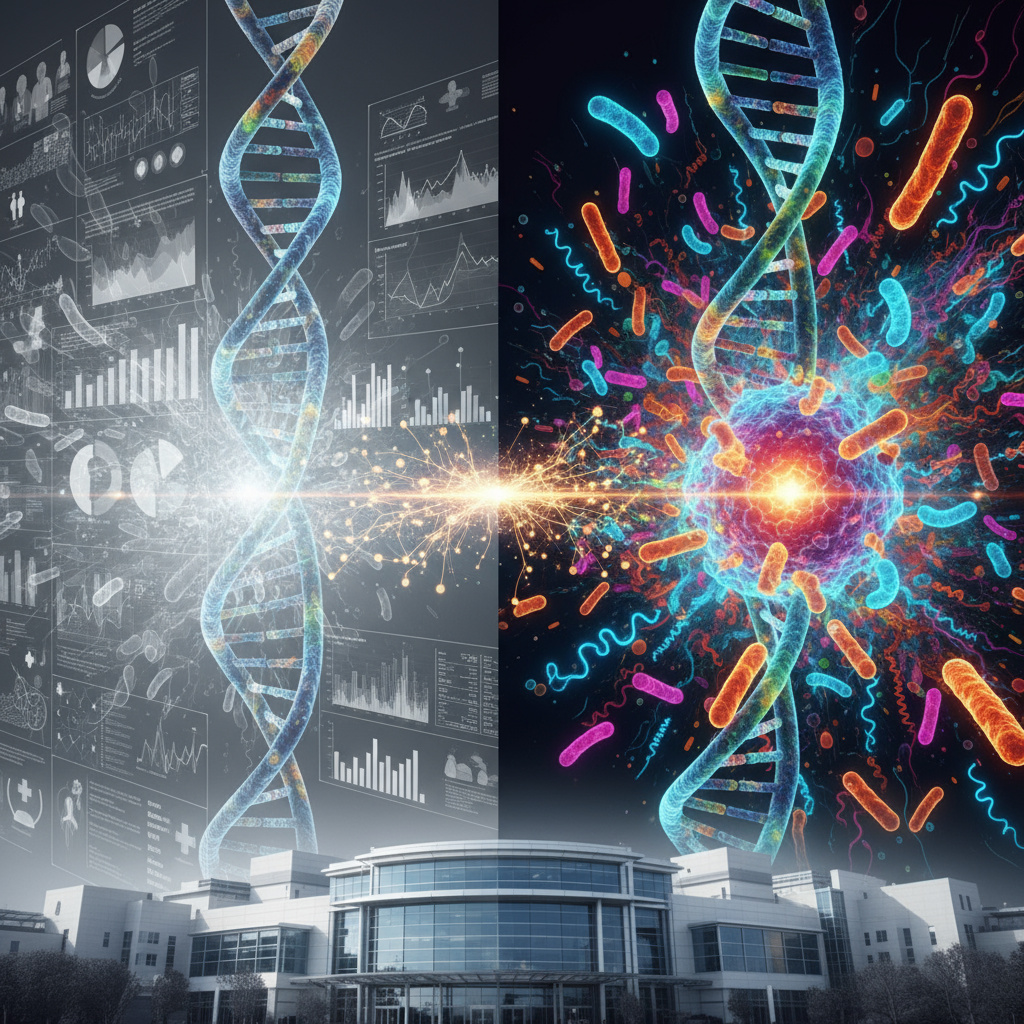
Healthcare’s “personalization” paradox persists despite technological advancement: AI systems operating on electronic health records and claims data reveal statistical trends across millions of patients whilst rarely capturing individual biological processes. These population-level models predict probabilities but cannot determine what occurs within any specific body. Mika Newton, CEO of xCures, observed: “AI will not transform healthcare if it operates in a vacuum. AI requires the foundation of high-quality data, which begins with patients.”
Parallel Health CEO Natalise Kalea Robinson distinguishes genuine biological personalization from demographic bucketing: “Most ‘personalized’ healthcare today is really just sophisticated segmentation — you’re placed in a bucket based on symptoms, then given the treatment that worked for most people in that bucket.” The company’s platform employs quantitative whole-genome sequencing to map skin microbiomes at the individual microbial level across multiple time points.
From Pattern Recognition to Causal Inference
Two patients sharing an acne diagnosis may possess entirely different underlying causes. One might exhibit Cutibacterium acnes phylotype 1A overgrowth whilst another demonstrates antibiotic-resistant strains explaining treatment failure. Robinson notes: “No two ‘acne’ patients have the same skin microbiome; we have yet to see that across our incredibly large data set.” This biological specificity enables targeted phage serums eliminating harmful strains whilst preserving beneficial microbes.
Dr. Nathan Brown, Parallel Health’s chief science officer, argues biology-driven data transforms AI from pattern-matching to mechanistic prediction: “Our AI can identify that specific microbial imbalances preceded symptom onset by months, enabling true prediction, not just early detection.” The system infers causality through analysis of microbial interactions with one another and human hosts, potentially shifting medicine from reactive to preventive paradigms. Independent researchers acknowledge microbiome-based AI potential whilst noting regulatory and standardisation challenges require resolution before widespread adoption.
Looking Forward
Platform technology enables scalable personalization without hand-crafting individual treatments. Parallel’s approach matches patients to solutions from an expanding toolkit of microbial strains and stabilised phage therapies — mirroring genomic medicine’s evolution from expensive sequencing to routine practice. However, Journal of Translational Medicine research notes precision therapy cost-effectiveness depends on reimbursement policies and access barriers that have historically constrained clinical genomics progress.
Ethical considerations around data sovereignty intensify as biology-driven AI advances. Robinson emphasises built-in transparency: “Patients must know what data is collected, how it will be used and what they get in return.” Recent bioethics research stresses that personalized medicine’s future depends on fairer systems of trust, consent, and shared benefit — not merely algorithmic sophistication.
Article based on analysis by Forbes