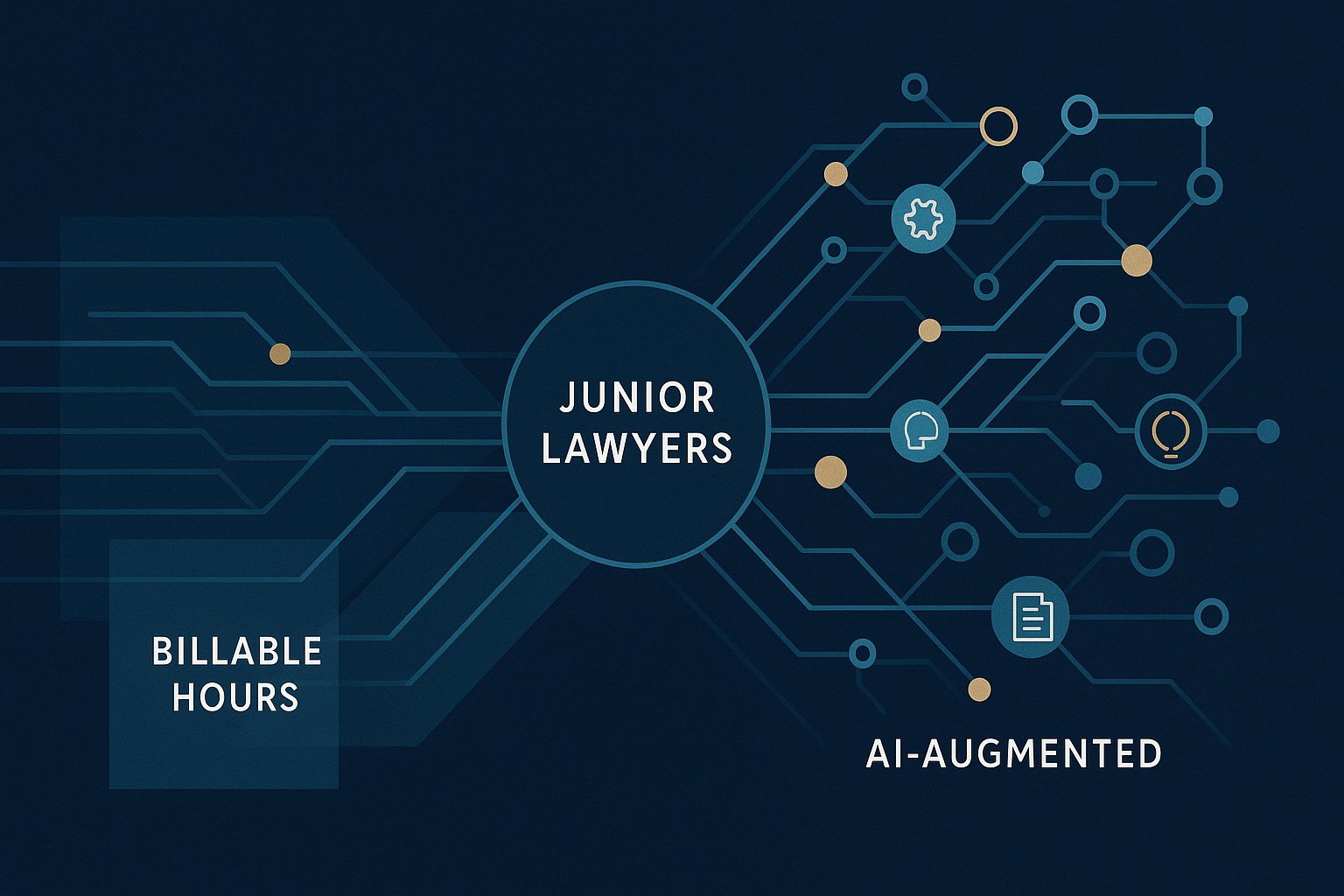
TL;DR: International law firm Ropes & Gray is allocating 20% of first-year associates’ billable time to AI training, recognising that traditional junior legal work is being automated and requiring new skills development approaches.
Boston-based international law firm Ropes & Gray has taken a significant step in addressing the AI skills gap by formally incorporating AI training into billable hours for first-year associates. The initiative, which began as a US pilot, is now being rolled out across all the firm’s offices, including in the UK.
Billable Hours for Skills Development
Under the programme, junior lawyers can replace traditional billable hours with time spent mastering the firm’s AI tools, evaluating emerging capabilities, creating customised prompts for client projects, and building overall AI fluency. This represents around 20% of their billable time—a substantial investment in workforce development that acknowledges the changing nature of legal work.
The move follows Ropes & Gray’s August partnership expansion with AI provider Hebbia, which streamlines document review and data analysis in high-stakes transactions. Melissa Bender, asset management partner, emphasised the competitive necessity: “Transactions move quickly, and our clients expect us to deliver sharp, actionable insights on tight timelines.”
Addressing the Junior Skills Crisis
The firm’s approach reflects a growing industry concern: AI and automation are eroding traditional junior-level work such as first-draft contract preparation and document review. Without intervention, this shift risks leaving junior lawyers without the practical exposure needed to develop essential legal skills.
Ropes & Gray isn’t alone in this recognition. International firm Kennedys is similarly working with AI platform Spellbrook to develop training programmes that adapt to the changed nature of junior legal work. Senior partner John Bruce articulated the strategic imperative: “This programme is about creating AI-fluent lawyers: professionals who can combine deep legal reasoning with the ability to work seamlessly alongside AI tools.”
Implications for Professional Services
The allocation of billable hours—traditionally the sacred metric of law firm productivity—to AI training signals a fundamental shift in how professional services firms view skill development. By treating AI training as billable work rather than overhead, Ropes & Gray is formally recognising that AI fluency is now a core professional competency, not an optional add-on.
This approach may provide a blueprint for other professional services sectors facing similar automation challenges, particularly in accounting, consulting, and financial services where junior-level analytical work is similarly vulnerable to AI displacement.
Source: Law Gazette