TL;DR
BP has withdrawn its application to build a major hydrogen project in Teesside after the site was selected for what could become Europe’s largest AI data centre. The decision exposes tensions between Energy Secretary Ed Miliband’s net zero ambitions and the Prime Minister’s AI growth strategy.
Data Centre Wins Over Hydrogen
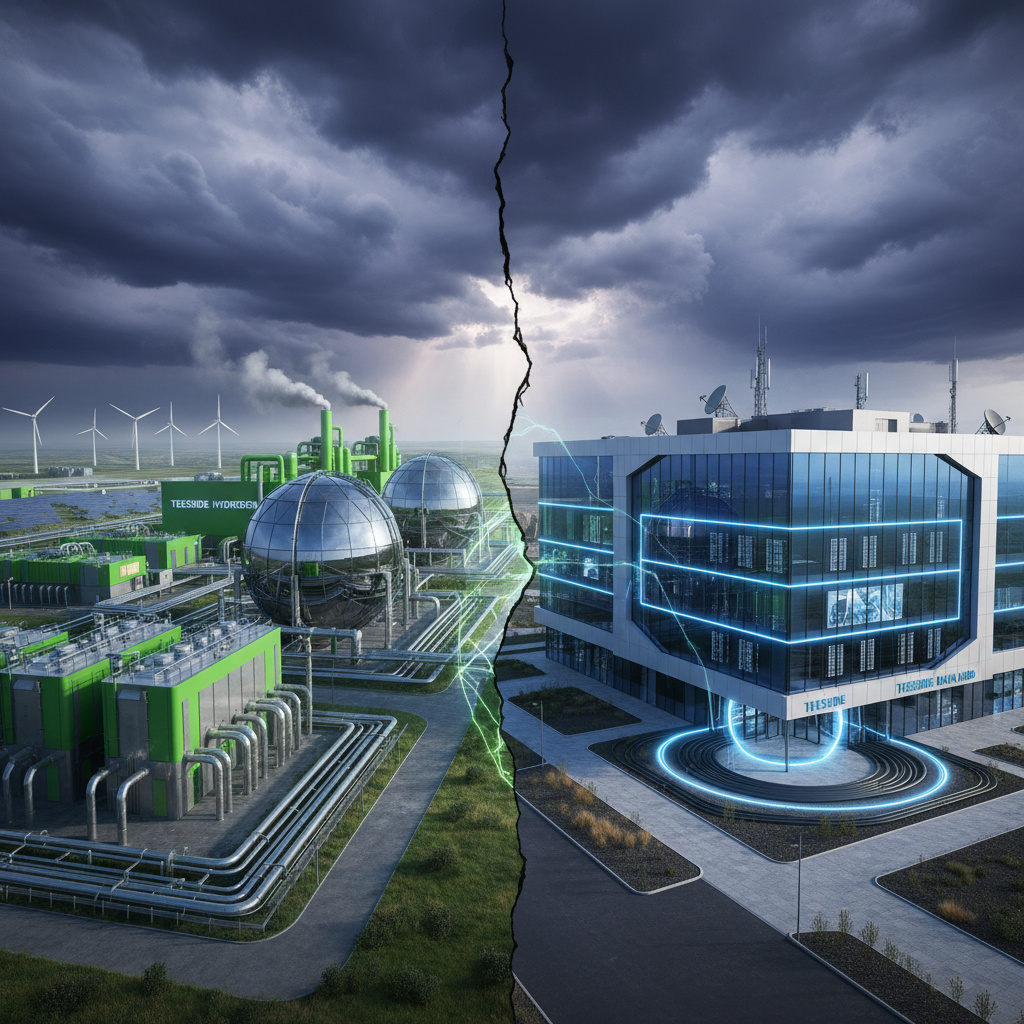
BP shelved its H2Teesside hydrogen project on Monday after clashing with separate government plans to construct a major AI data centre on the same site. Downing Street had selected the former steel site as the location for its second AI Growth Zone, with Labour banking on AI technology to turbocharge economic growth.
The competing projects put Energy Secretary Ed Miliband—who was relying on the BP project to meet net zero ambitions—against Prime Minister Sir Keir Starmer and Business Secretary Peter Kyle. BP said the Labour-led Redcar and Cleveland council’s decision to support the data centre ultimately made its hydrogen project unviable.
In a letter to the Energy Department, BP insisted the decision had “not been taken lightly” and maintained that hydrogen has “an important role to play in the future energy market.” A BP spokesman also cited “material changes in circumstances” including the local planning approval for a data centre on the same land.
Cabinet Tensions Surface
Tensions between the Energy Department and Business Secretary Kyle escalated to such an extent that Kyle explored legal routes to influence Miliband’s decision on the hydrogen project. Miliband had already twice delayed a decision on whether to grant development consent for producing “blue” hydrogen from natural gas with carbon capture.
Sir Keir has claimed AI will help deliver “a decade of national renewal,” with plans for the new AI growth zone expected before Christmas. A decision on BP’s consent order was due on Thursday 4 December, but BP withdrew its application ahead of the announcement to clear the path for the data centre.
Looking Forward
The Teesside situation illustrates the difficult trade-offs governments face between competing climate and technology priorities. While hydrogen remains crucial for decarbonising heavy industry, the immediate economic promise of AI infrastructure has proven more compelling. Whether this pattern repeats elsewhere could shape the UK’s energy transition for years to come.
Source: The Telegraph