TL;DR
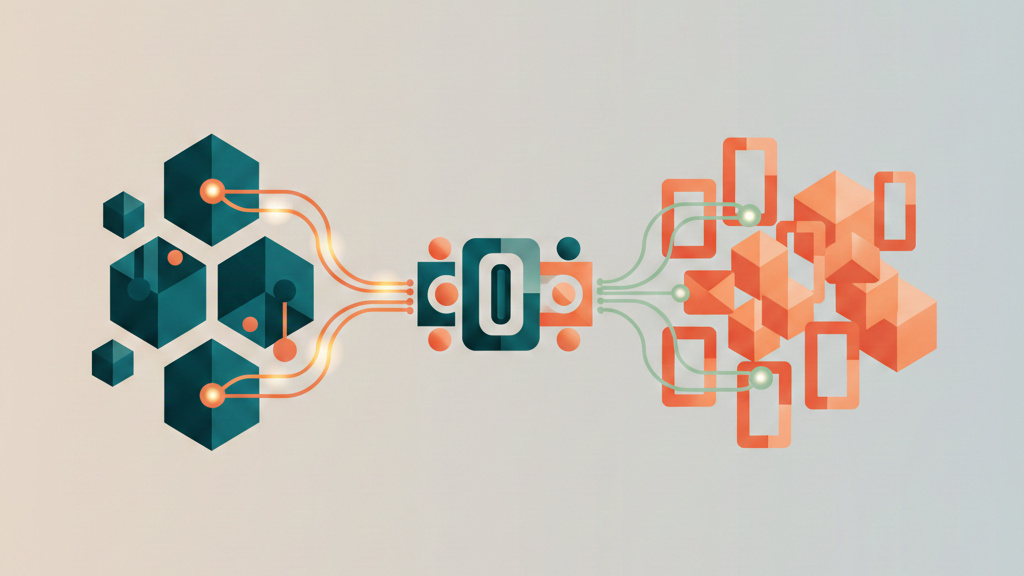
Google Cloud has announced fully-managed Model Context Protocol (MCP) servers, providing enterprise-ready connectivity between AI agents and Google services. Initial support covers Maps, BigQuery, Compute Engine and Kubernetes Engine, with plans to expand across the entire Google Cloud portfolio.
From Fragile to Fully-Managed
Anthropic’s MCP—often called “USB-C for AI”—has emerged as a common standard for connecting AI models with external tools and data. However, implementing Google’s community-built MCP servers previously required developers to install and manage individual local servers, often resulting in fragile implementations.
Google’s new approach enhances existing API infrastructure with native MCP support. Developers can point AI agents or MCP clients like Gemini CLI to globally-consistent, enterprise-ready endpoints without managing local servers.
The initial release covers four key services. Maps Grounding Lite connects agents to geospatial data for accurate location queries. BigQuery MCP enables agents to interpret schemas and execute queries against enterprise data without security risks of moving data into context windows. GCE and GKE servers expose infrastructure provisioning and container operations as discoverable tools for autonomous management.
Enterprise Security Built In
Google has paired ease of discovery with rigorous control. Administrators can manage access through Cloud IAM, utilise audit logging for observability, and deploy Model Armor to defend against agentic threats like indirect prompt injection.
David Soria Parra, MCP co-creator at Anthropic, praised the announcement: “Google’s support for MCP across such a diverse range of products will help more developers build agentic AI applications.”
Looking Forward
Additional services including Cloud Run, Cloud Storage, AlloyDB, Spanner, Looker and Google Security Operations will receive MCP support in coming months. For UK businesses building AI agents, this significantly reduces the integration burden—though the enterprise focus means costs and complexity may still favour larger organisations initially.
Source: Google Cloud